Launch offer — valid today only

📄 Digital book in PDF · read it on your phone or print it

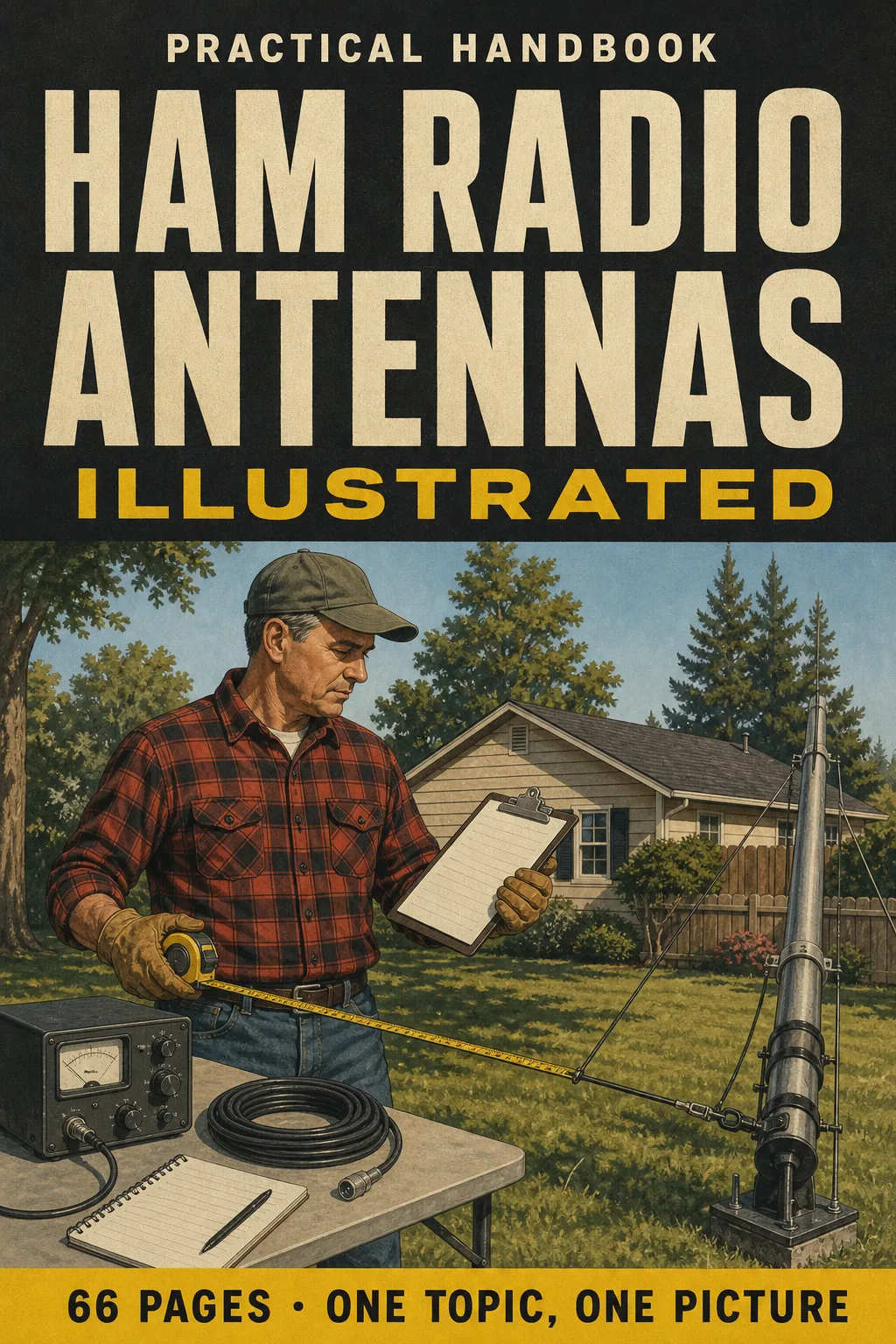
HF and VHF Ham Radio Antennas in Drawings One Antenna on Every Page

Dipoles, end-feds, verticals, J-poles, Yagis, coax and baluns, SWR tuning with the analyzer, grounding and power-line safety. Cut lengths in feet and inches for the US ham bands, from 80 m to 2 m. One topic per page, the drawing first. PDF by email, printable. 66 illustrated pages.

SEND ME THE ANTENNA BOOK

🔒 Secure checkout · PDF by email · 30-day guarantee
Every topic, its own pageEach antenna drawn with its parts labeled, the explanation right beside it
66 illustrated pages8 parts, from wavelength in feet to your antenna record page
Up-to-date sourcesFCC Part 97, OET Bulletin 65 and NEC Article 810
PDF by emailFormat

Look Inside the Book

Every page has one big drawing and a box with the cut lengths, numbers and steps you need to know:

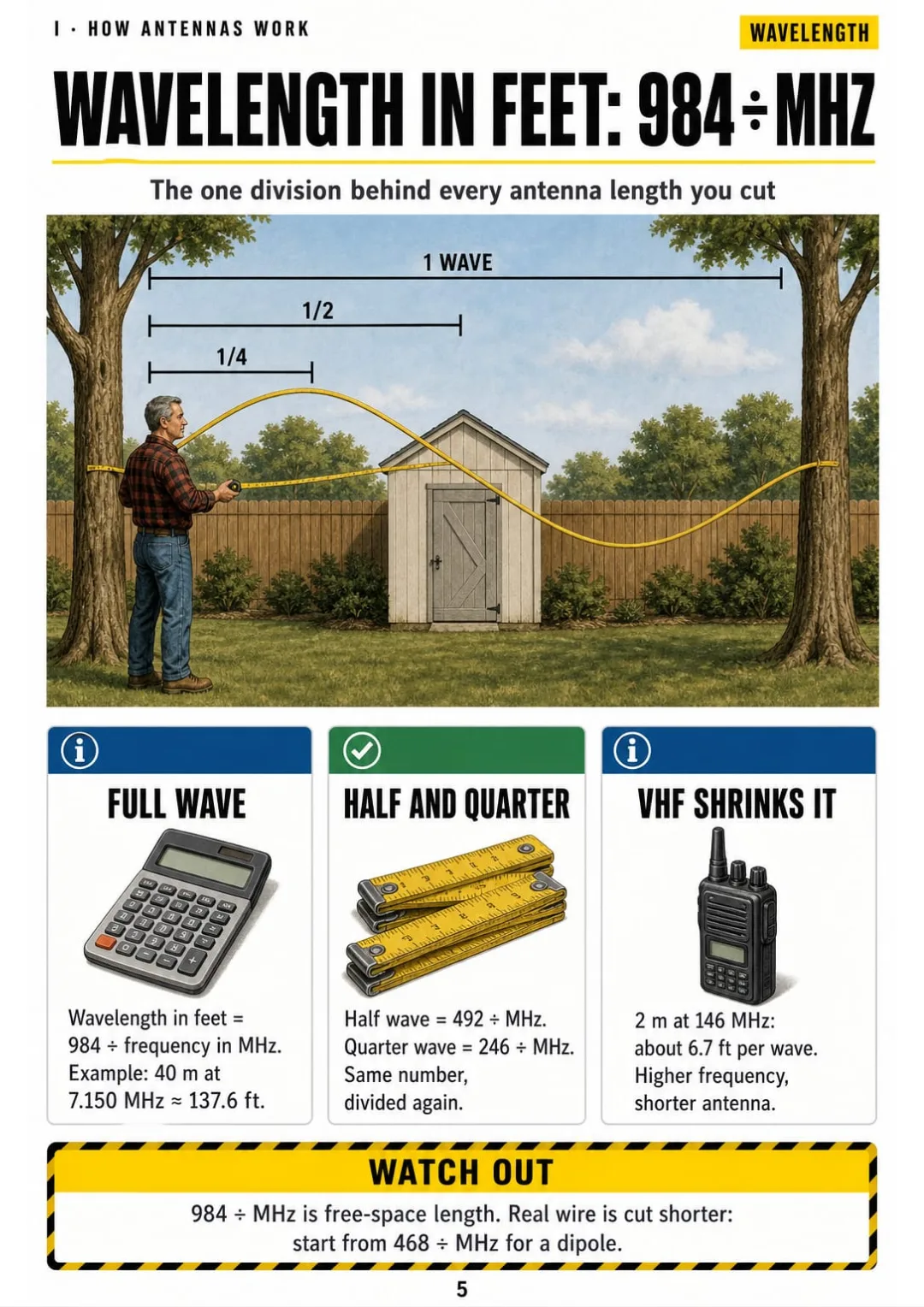
Wavelength in feet = 984 ÷ MHz: 7.150 MHz ≈ 137.6 ft, 146 MHz ≈ 6.7 ft.
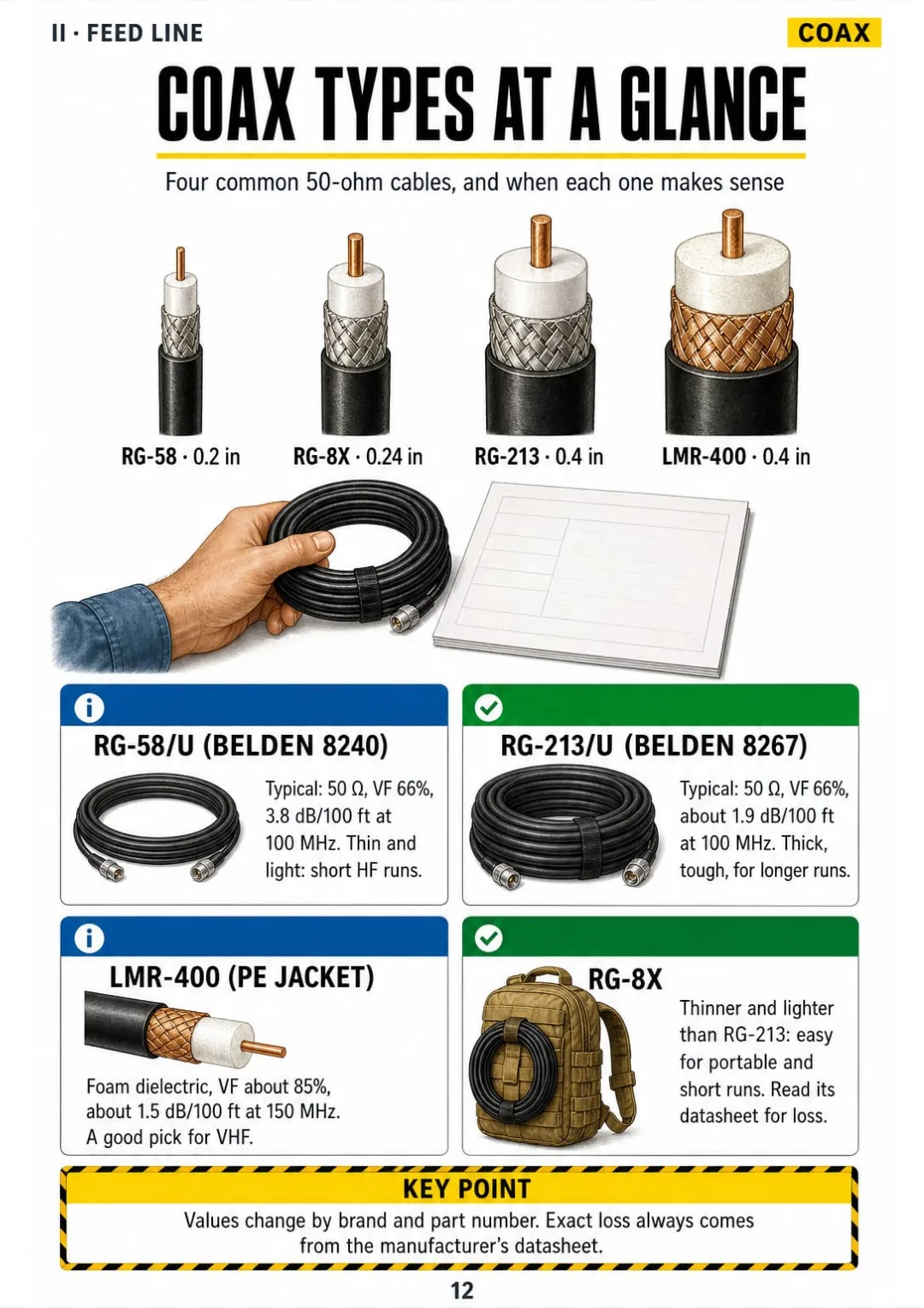
RG-58, RG-8X, RG-213 and LMR-400 in cross-section, with typical VF and loss
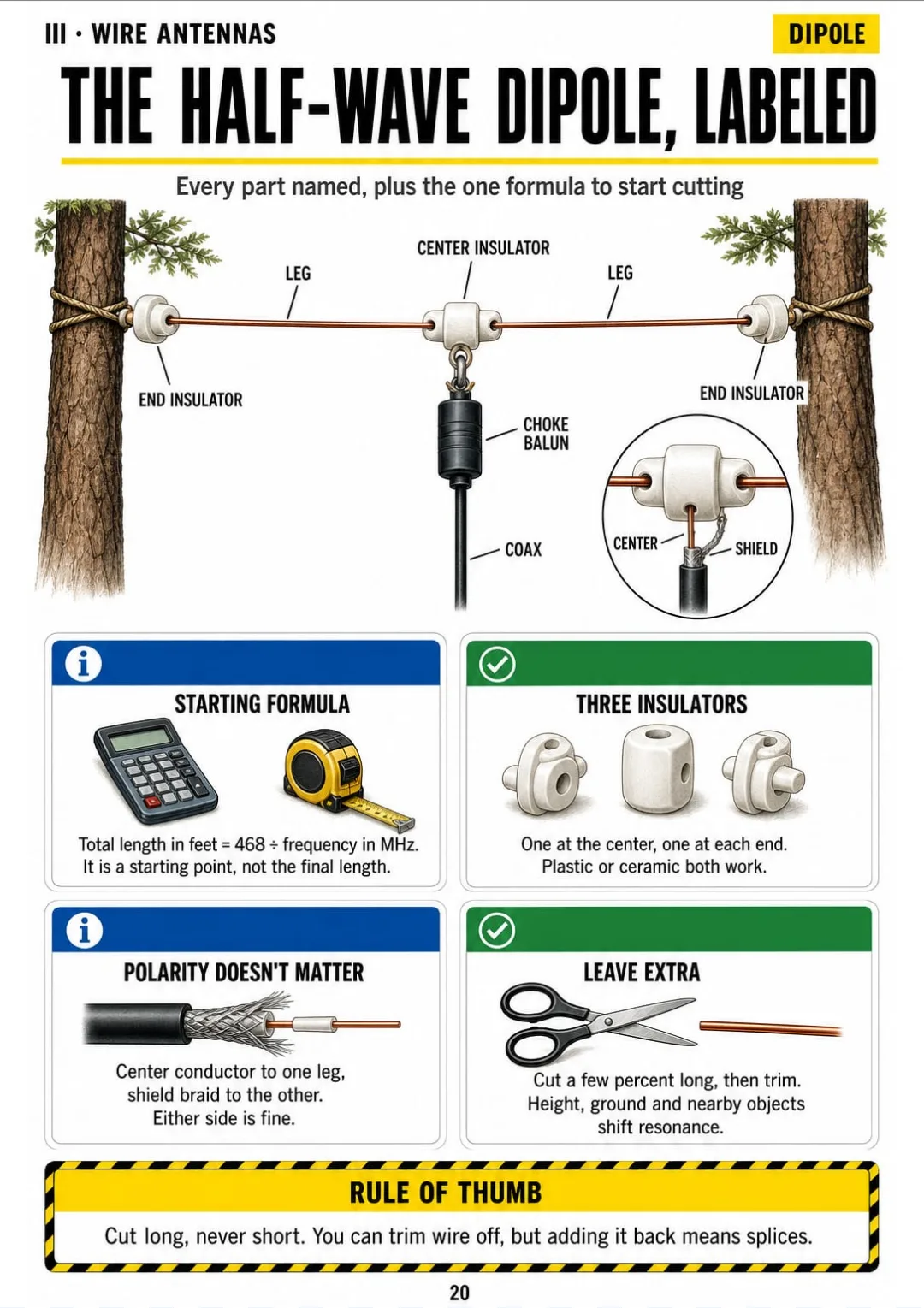
Half-wave dipole: 468 ÷ f in MHz gives the starting length in feet; cut a few percent long, then trim.
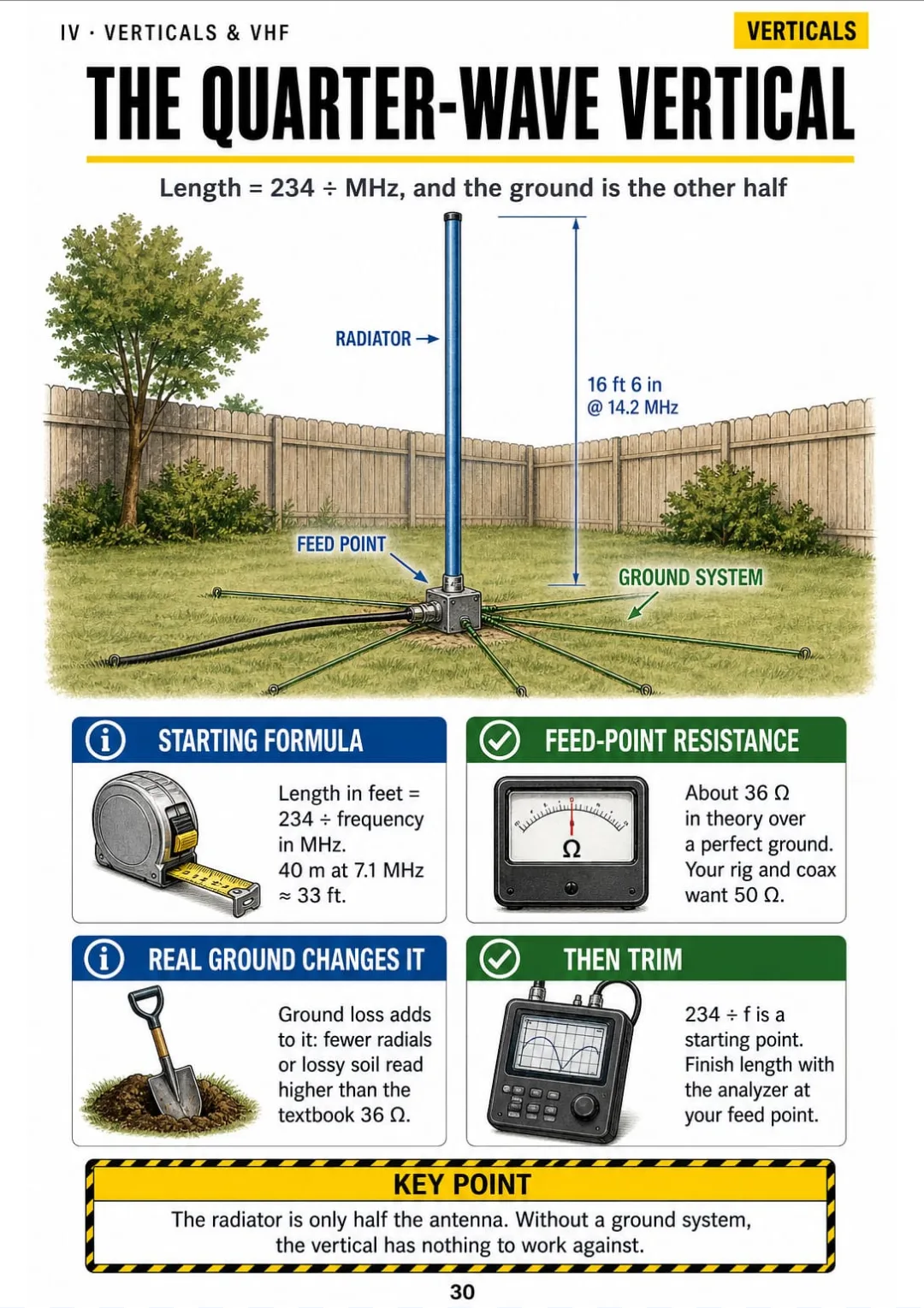
234 ÷ MHz = feet: about 16 ft 6 in for 20 m, plus the ground system
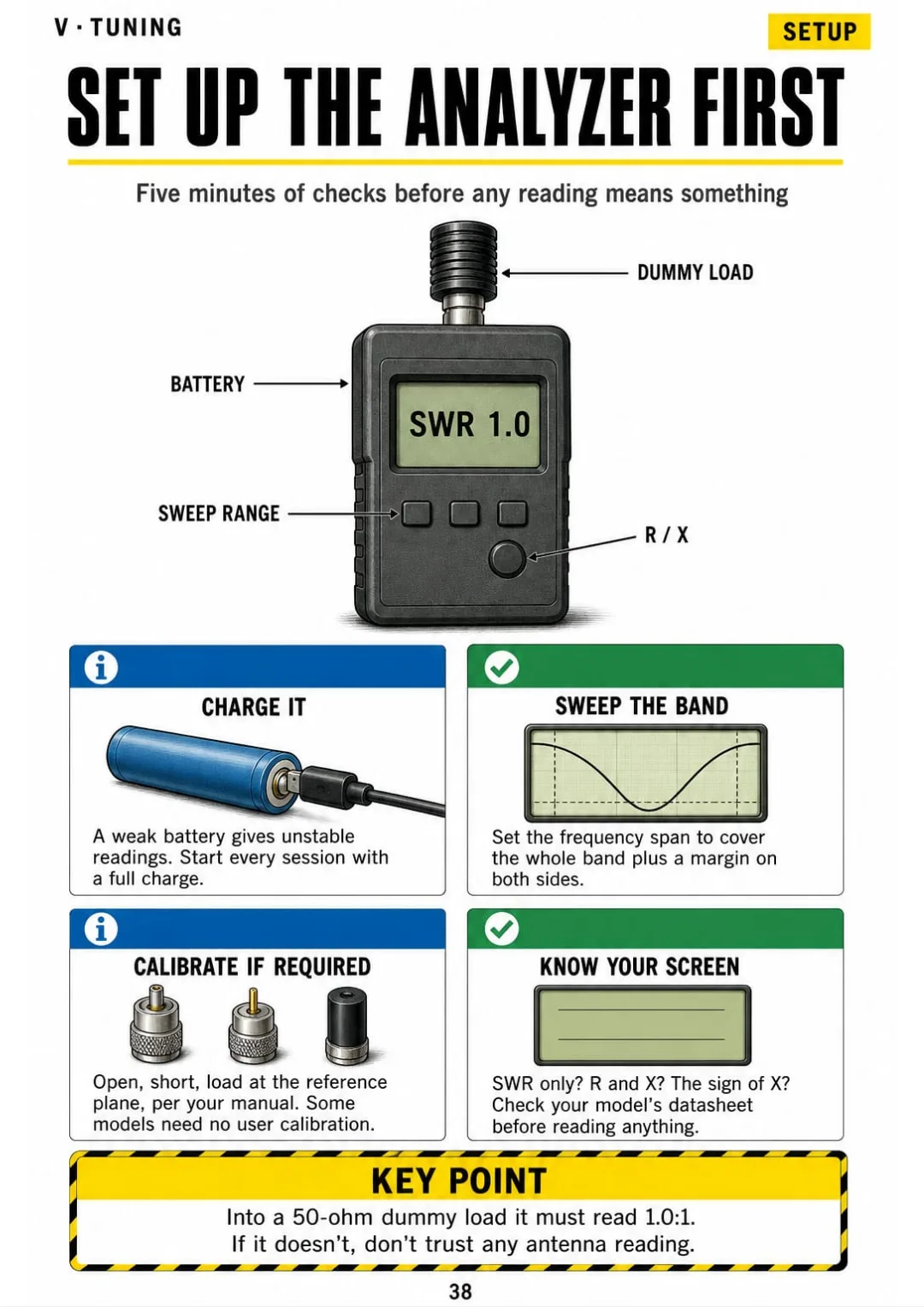
Battery, sweep range, calibration and a 50-ohm dummy load that reads 1.0:1
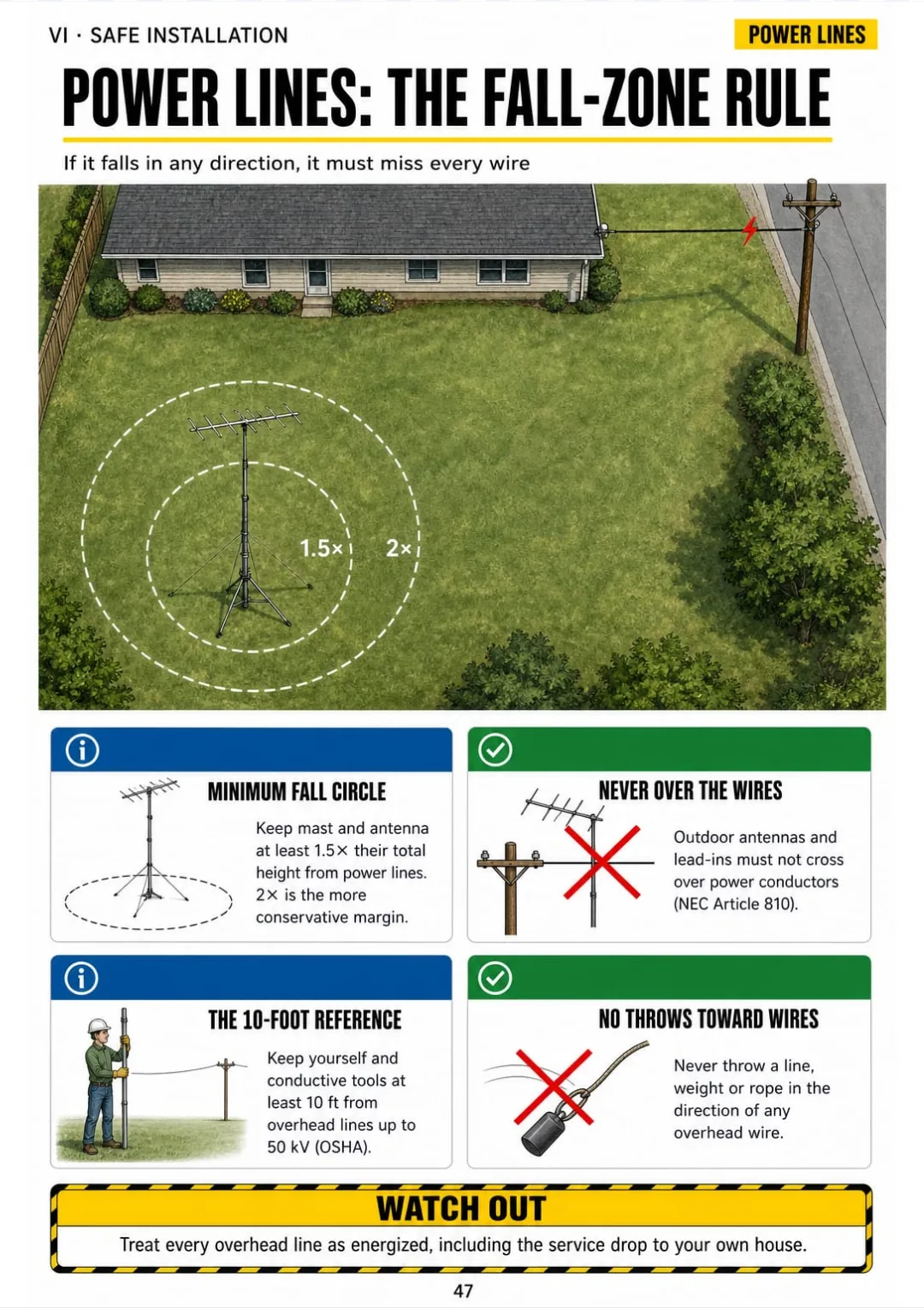
Fall circle: at least 1.5× the mast-plus-antenna height from any power line, 2× to be safer.
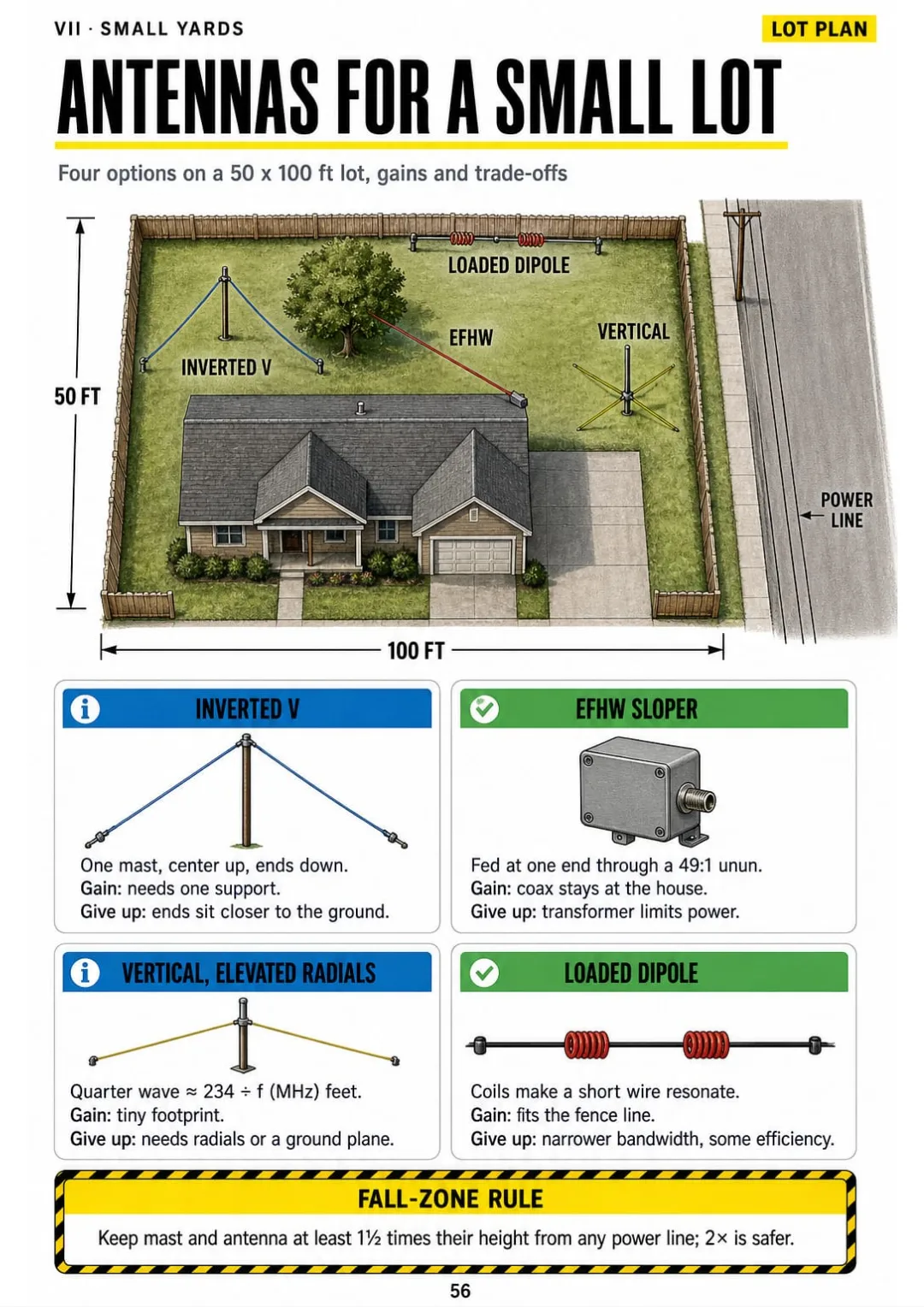
Inverted V, EFHW, vertical or loaded dipole: what each one gives and takes on a small lot
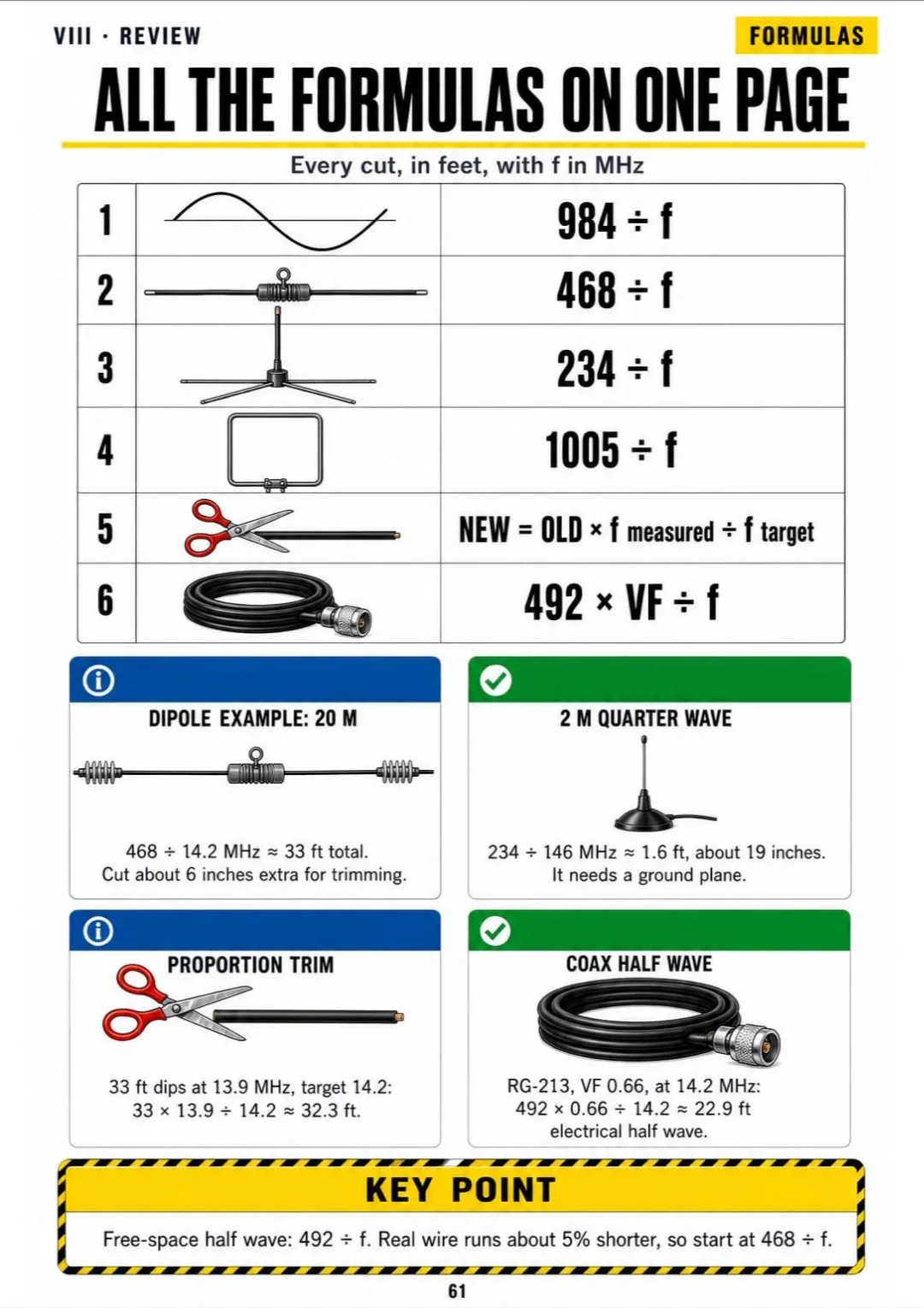
984/f, 468/f, 234/f, 1005/f, the trim proportion and 492 × VF/f, with worked examples

Swipe to see more →

These are real pages from the book. The table of contents is the full one: 8 parts and 62 topics.

The Problem Isn't You. It's How It Was Explained to You.

You're out in the yard with a half-wave dipole you cut from 468 ÷ f. It's up, the analyzer reads 2.8:1, and you don't know if the wire is long, short, or if the problem is at the center.

The manual covers the dipole in long paragraphs: end effect, feed point, balun, velocity factor, all in one block of prose. You read it, it makes sense, and you still don't know how much to take off each leg.

Half-wave dipole: 468 ÷ f in MHz gives the starting length in feet; cut a few percent long, then trim.

Here the half-wave dipole is one page. The two legs, the center insulator, the balun and the coax are drawn and labeled, with 468 ÷ f in a box and the rule beside it: cut a few percent long, then trim.

The same goes for the inverted V, the end-fed half wave, the quarter-wave vertical, the J-pole and the choke balun. Each one has its own page.

You see where each part goes, you understand why the dip moved, and you trim the wire without going back to the manual.

COMPARE FOR YOURSELF

Same Topic, Two Ways to Learn It

THIS
  • The manual: line after line after line
  • Coax types explained only in words
  • You walk out to the yard still unsure
Coaxial transmission lines commonly employed in amateur installations differ in center conductor construction, dielectric material, shield coverage and outer diameter, each of which affects attenuation and velocity factor. Solid polyethylene dielectric cables exhibit a velocity factor of approximately 0.66, whereas foamed dielectrics typically fall between 0.78 and 0.85. Attenuation per hundred feet increases with frequency and decreases with conductor diameter, so that smaller cables such as RG-58 incur substantially greater losses at VHF than larger types such as RG-213, assuming equivalent lengths and a matched termination.
FOR THIS
  • Each coax drawn in cross-section
  • Velocity factor and loss in one box
  • You see it and you get it
RG-58, RG-8X, RG-213 and LMR-400 in cross-section, with typical VF and loss
CONTENTS

Take a Look at the 8 Parts and 62 Topics

How an antenna works, feed line and baluns, HF wire antennas, verticals and VHF, tuning with the analyzer, safe installation, small yards, and review checklists: 66 pages, all illustrated.

IHow an Antenna Really Works · pp. 5-11
  1. Wavelength in Feet: The Number Behind Every Cut
  2. Resonance: Where the Antenna Wants to Be
  3. Impedance and the 50-Ohm Target
  4. SWR in Plain Numbers
  5. Radiation Pattern and Polarization
  6. Height Changes Everything
  7. HF and VHF Bands: Which Antenna for Which Band
IIFeed Line, Baluns and Connectors · pp. 12-19
  1. Coax Types at a Glance
  2. Coax Loss Grows with Frequency and Length
  3. Why Your Analyzer Reading Changes with Coax Length
  4. Common-Mode Current: The Coax That Radiates
  5. The 1:1 Choke Balun
  6. Transformers: 4:1, 9:1 and 49:1
  7. PL-259, N and BNC: Install a Connector Right
  8. Ladder Line and Window Line
IIIWire Antennas for HF · pp. 20-29
  1. The Half-Wave Dipole: Parts Labeled
  2. Dipole Cut Table: 80 to 10 Meters
  3. Inverted V: One Support, Less Space
  4. Fan Dipole: Several Bands, One Feed Line
  5. Trap Dipole: How the Traps Switch Bands
  6. End-Fed Half Wave (EFHW)
  7. Random-Wire End-Fed with a 9:1
  8. Off-Center-Fed Dipole (OCF)
  9. Full-Wave Loop
  10. Wire, Insulators and Rope
IVVerticals and VHF Antennas · pp. 30-37
  1. The Quarter-Wave Vertical
  2. Radials: How Many and How Long
  3. 2 m Quarter-Wave Ground Plane
  4. The J-Pole: Dimensions and Feed Point
  5. Slim Jim and Coaxial Collinear: What Changes
  6. The 3-Element Yagi: Reflector, Driven, Director
  7. Tape-Measure Yagi for 2 m
  8. Mobile Antennas: Mounts and Ground
VTuning with the Analyzer · pp. 38-46
  1. Set Up the Analyzer Before You Trust It
  2. The Fixed Tuning Order in 4 Steps
  3. Dip Too Low or Too High? Cut or Lengthen
  4. How Much to Cut: The Proportion Method
  5. Low SWR but Wrong Resistance
  6. Reading R and X: What the Sign Tells You
  7. Why SWR Changes When You Raise the Antenna
  8. The Tuner: What It Fixes and What It Doesn't
  9. Diagnosing a Bad Reading: Antenna, Balun or Coax?
VISafe Installation · pp. 47-55
  1. Power Lines: The Fall-Zone Rule
  2. Antenna Grounding per NEC Article 810
  3. Bonding the Shack and the Entry Panel
  4. Lightning: Disconnect, Don't Gamble
  5. Masts and Guy Lines
  6. Getting the Wire into the Tree
  7. Weatherproofing Connectors
  8. RF Exposure: The Station Evaluation
  9. HOAs, Neighbors and Tall Structures
VIISmall Yards and Real-World Problems · pp. 56-60
  1. Antennas for a Small Lot
  2. Shortened Antennas: Loading Coils and Capacity Hats
  3. Attic and Indoor Antennas
  4. Noise on Receive: Find the Source
  5. RF in the Shack and Interference to Neighbors
VIIIReview, Checklists and Frequent Mistakes · pp. 61-66
  1. All the Formulas on One Page
  2. Before You Cut: Build Checklist
  3. Before You Raise It: Safety Checklist
  4. Frequent Mistakes: Building
  5. Frequent Mistakes: Tuning and Installing
  6. Your Antenna Record Page

One Page, One Topic, All Clear

Think of it this way:

It's Saturday morning. The wire is cut, the rope is over the branch, and the analyzer shows the dip sitting below the band. You need to know two things: cut or lengthen, and by how much.

You open the book to the tuning pages and it's drawn right there: a dip below the band means the wire is long, and the proportion method tells you how much to take off.

Battery, sweep range, calibration and a 50-ohm dummy load that reads 1.0:1

Same with the choke balun, the J-pole dimensions, how many radials and how long, the fall-zone rule around power lines and weatherproofing a PL-259. Each one on its own page.

Ham Radio Antennas Illustrated is 8 parts and 62 topics, all drawn, and at the end all the formulas on one page, a build checklist, a safety checklist and your antenna record page.

What you see drawn, you don't have to memorize.

What's Inside Ham Radio Antennas Illustrated:

Ipp. 5-11

How an Antenna Really Works

Wavelength in feet, resonance, the 50-ohm target, SWR in plain numbers, radiation pattern, why height matters, and the bands your license gives you.

IIpp. 12-19

Feed Line, Baluns and Connectors

Coax types and their loss, why the analyzer reading changes with coax length, common-mode current, choke baluns, 4:1, 9:1 and 49:1 transformers, connectors and ladder line.

IIIpp. 20-29

Wire Antennas for HF

The half-wave dipole with its cut table from 80 to 10 meters, inverted V, fan and trap dipoles, EFHW, random wire, OCF, full-wave loop, and the wire, insulators and rope.

IVpp. 30-37

Verticals and VHF Antennas

The quarter-wave vertical and its radials, the 2 m ground plane, J-pole, Slim Jim and collinear, the 3-element Yagi, the tape-measure Yagi and mobile mounts.

Vpp. 38-46

Tuning with the Analyzer

Analyzer setup, the fixed tuning order in 4 steps, cut or lengthen, the proportion method, reading R and X, height changes, what a tuner fixes and how to diagnose a bad reading.

VIpp. 47-55

Safe Installation

The fall-zone rule around power lines, grounding and bonding per NEC Article 810, lightning, masts and guy lines, getting wire into a tree, weatherproofing, RF exposure evaluation and HOAs.

VIIpp. 56-60

Small Yards and Real-World Problems

Antennas for a small lot, loading coils and capacity hats, attic and indoor antennas, finding receive noise, and RF in the shack or in the neighbors' gear.

VIIIpp. 61-66

Review, Checklists and Frequent Mistakes

All the formulas on one page, build and safety checklists, frequent building and tuning mistakes, and a page to record your own antenna.

At the end of the book: All the formulas on one page, build and safety checklists, frequent mistakes and an antenna record page.

Plus: 2 Free Books

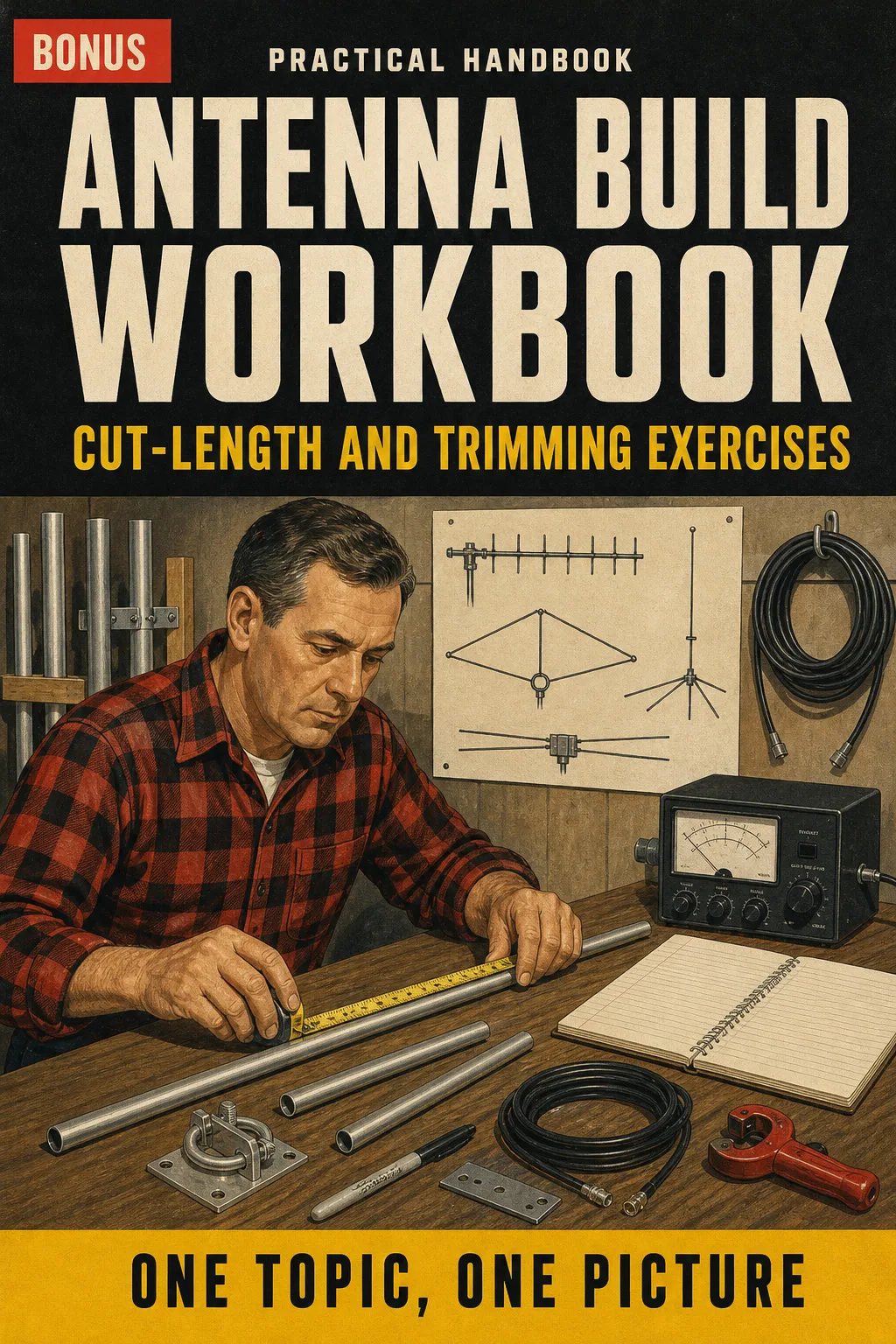
Antenna Build Workbook: Cut-Length and Trimming Exercises

BONUS 1: «Antenna Build Workbook: Cut-Length and Trimming Exercises»

Value on its own: US$ 17.90

Practice the math before you cut the wire: worked cut-length, trimming and coax loss exercises with answers, so the numbers make sense on paper first.

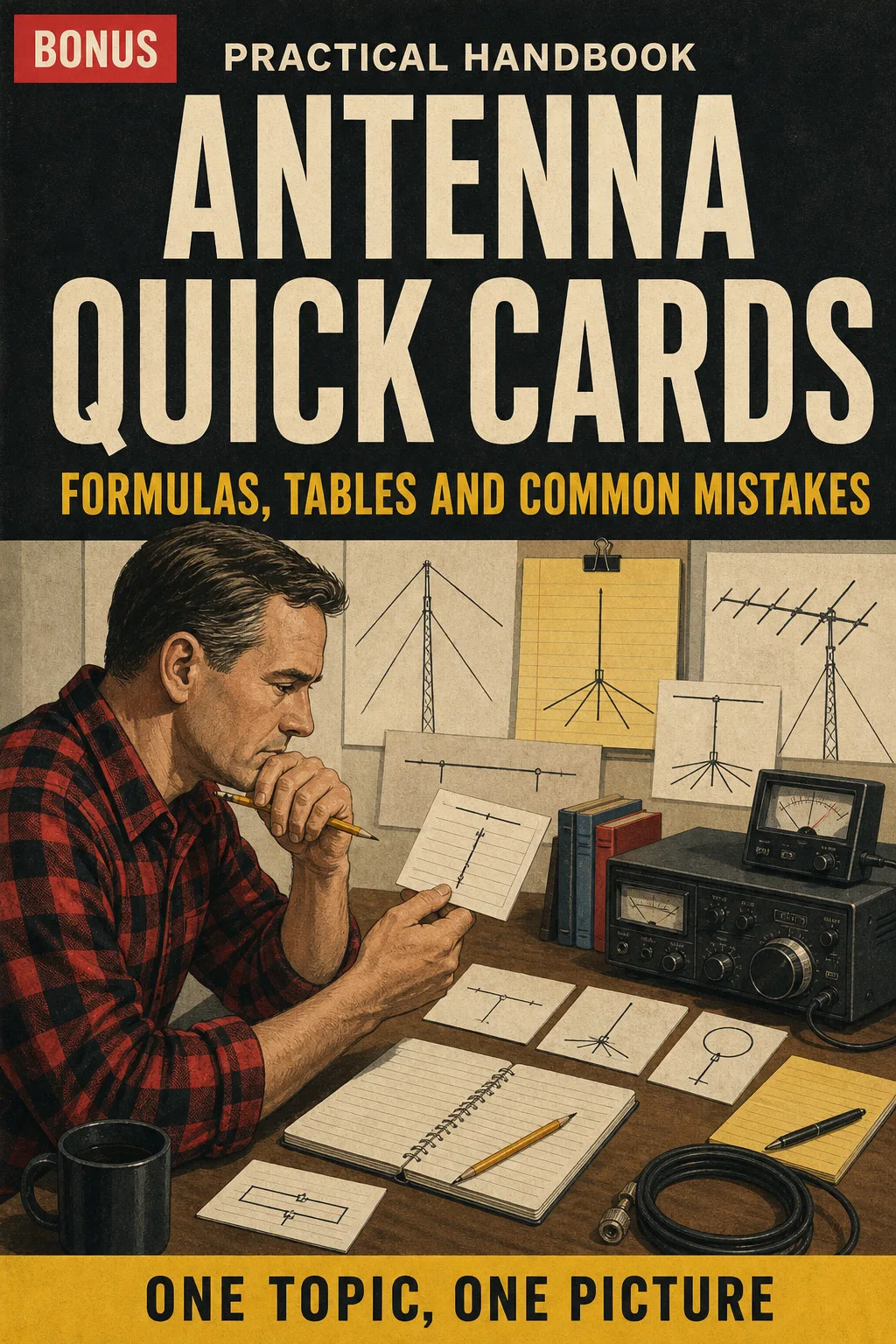
Antenna Quick Cards: Formulas, Tables and Common Mistakes

BONUS 2: «Antenna Quick Cards: Formulas, Tables and Common Mistakes»

Value on its own: US$ 14.90

Every formula, band table and frequent mistake on printable cards you can keep at the bench or take out to the yard.

Ham Radio Antennas Illustrated with 2 Free Books

  • Ham Radio Antennas Illustrated: 66 illustrated pagesUS$ 63
  • BONUS 1: Antenna Build Workbook: Cut-Length and Trimming ExercisesUS$ 17.90
  • BONUS 2: Antenna Quick Cards: Formulas, Tables and Common MistakesUS$ 14.90
  • High-resolution PDF to printIncluded
Total value US$ 95.80
YOUR PRICE:
US$ 27
You save US$ 68.80
YES, I WANT HAM RADIO ANTENNAS ILLUSTRATED FOR US$ 27

📄 This is a digital PDF book sent to your email: nothing is printed or shipped.

Secure purchaseEncrypted payment30-day guarantee

PDF by email: We email you Ham Radio Antennas Illustrated as a PDF, together with the two free books. It's a single payment: no installments, no extra charges.

Who This Book Is For

You're building your first antennas

You're building your first antennas

Every antenna is drawn with its parts labeled and its cut length in feet and inches. You see what goes where before you cut any wire.

You're back on the air after years off

You're back on the air after years off

The numbers you forgot are back on one page each: 468 ÷ f, 234 ÷ MHz, the tuning order. You get your station up again without relearning it all from scratch.

You already run a station

You already run a station

When a reading looks wrong, the diagnosis pages help you check the antenna, the balun or the coax in order. Print the checklists and keep them at the bench.

Everything You Get Today

US$ 95.80US$ 27
YES, I WANT HAM RADIO ANTENNAS ILLUSTRATED FOR US$ 27

📄 This is a digital PDF book sent to your email: nothing is printed or shipped.

30DAYS
GUARANTEE

30-Day Guarantee

Try Ham Radio Antennas Illustrated for 30 days, bonus books included.

We refund everything if the file won't open, if the book isn't what you see here, if you were charged twice or if the email doesn't arrive. Just email us.

You pay once. No subscriptions.

Frequently Asked Questions

Is it for me if I've already built a few antennas?

Yes. It opens with the basics, but most pages cover building, tuning with the analyzer, troubleshooting and safe installation. Those are the pages you go back to even after years on the air.

Where does the content come from?

From standard antenna formulas, checked against the FCC amateur radio rules (47 CFR Part 97), FCC OET Bulletin 65 for RF exposure, NEC Article 810 for grounding and bonding, and manufacturer datasheets for coax, baluns and analyzers.

Is this official material?

No. It's an independent illustrated book. It isn't published or endorsed by the FCC, NFPA, any amateur radio association or any manufacturer.

Does it replace hands-on training or a licensed electrician?

No. It's a study and reference book. For grounding, bonding and anything near electrical service, check your local rules and work with a licensed electrician.

Are the practice exercises from an official exam?

No. The cut-length, trimming and coax-loss exercises in the workbook were written for this book. They aren't questions from any official exam.

When and how do I get it?

The book and the 2 bonus books come as PDFs by email, sent to the address you enter at checkout.

Do I have to pay every month?

No. It's a one-time payment. No subscription.

Can I have it on paper?

It's a PDF, and you can print it. Print it at home or at a print shop and take the pages you need out to the yard.

How does the refund work?

You have 30 days. We refund everything if the file won't open, if the book isn't what you see on this page, if you were charged twice or if the email doesn't arrive: just email us.

Before You Close This Page

No more rereading pages that don't stick.

The dipole, the choke balun, the J-pole: you see each one drawn, and that's it.

You walk out to the yard knowing where every number is.

Drawings make studying faster.

The book is right below.

One-time payment: US$ 27 · Guarantee: 30 days · PDF by email

YES, I WANT HAM RADIO ANTENNAS ILLUSTRATED FOR US$ 27

📄 This is a digital PDF book sent to your email: nothing is printed or shipped.